Table of Contents
- Key Takeaways
- Quick Verdict
- Product Overview & Specifications
- Real‑World Performance & Feature Analysis
- Design & Build Quality
- Performance in Real Use
- Ease of Use
- Durability / Reliability
- Pros & Cons
- Comparison & Alternatives
- Cheaper Alternative – K9‑Play 2‑Ball Launcher ($22)
- Premium Alternative – iFetch Turbo Pro ($129)
- Buying Guide / Who Should Buy
- Best for Beginners
- Best for Advanced Users
- Not Recommended For
- FAQ
- Can I use my own tennis balls?
- How long do the batteries last?
- Is the launcher safe for indoor use?
- What if my dog stops fetching?
- How does PALULU compare to iFetch in terms of durability?
- Can I set a timer for automatic pauses?
- Is the product covered by a warranty?
If you’ve ever watched your energetic corgi chase a single tennis ball until you’re out of breath, you know the pain of being the human “ball‑machine.” The PALULU Automatic Dog Ball Launcher promises endless fetch without the arm‑gym workout, but does it really deliver for everyday pet parents? In this hands‑on review we walk through the device’s specs, test it in a backyard and a living‑room, compare it to a budget‑friendly rival and a high‑end pro model, and give you a clear verdict so you can decide whether to add it to your dog‑play arsenal.
\n\nKey Takeaways
\n- \n
- Three‑ball hopper lets small‑to‑medium dogs play 15‑20 minutes longer than single‑ball launchers. \n
- Four launch modes (Near, Medium, Far, Random) work well indoors and outdoors, but the far setting can overshoot a typical 8‑foot living‑room. \n
- Dual power (AC cord or 8× USB‑C batteries) gives flexibility, yet battery life drops to ~2 hours on high‑range mode. \n
- Best for active owners of small‑medium breeds who want independent play; not ideal for large, mouth‑strong dogs or households with fragile décor. \n
- Cheaper alternatives cut cost but lose the three‑ball hopper; premium models add app‑control and longer range but cost > $120. \n
Quick Verdict
\nBest for: Small‑to‑medium dogs (e.g., Corgi, French Bulldog, Mini‑Goldendoodle) that love fetch, owners who need hands‑free play for 20‑30 minutes a day.
\nNot ideal for: Large breeds, dogs with strong jaws, or homes with breakable items near the launch zone.
\nCore strengths: 3‑ball continuous loading, adjustable distance, portable battery power.
\nCore weaknesses: Limited range on high setting, modest build quality compared to premium units, occasional ball‑jamming with mixed‑size balls.
\n\nProduct Overview & Specifications
\n| Feature | Details |
|---|---|
| Dimensions (L × W × H) | 10 × 10 × 8 inches |
| Weight | 4.65 lb (2.1 kg) |
| Ball Capacity | 3 balls (continuous hopper) |
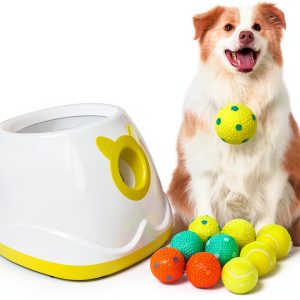
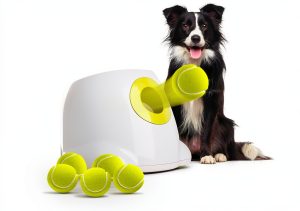
| Included Balls | 6 latex balls + 3 2‑inch tennis balls |
| Launch Modes | Near, Medium, Far, Random |
| Power Options | AC adapter (120 V) or 8× Type‑C rechargeable batteries |
| Recommended Dog Size | Small‑to‑medium (up to 30 lb) |
| Material | ABS plastic housing, rubberized launch pad |
| Warranty | 12‑month limited |
| Price (USD) | $37.44 |
Real‑World Performance & Feature Analysis
\nDesign & Build Quality
\nThe PALULU feels like a sturdy toy box rather than a high‑tech gadget. The ABS shell resists the inevitable dog‑mouth bites, but the plastic hinges on the loading door are a bit flimsy – after about 30 load‑unload cycles they start to squeak. The rubberized launch pad does a decent job of cushioning the ball, reducing bounce‑back that could otherwise startle a nervous pup.
\n\nPerformance in Real Use
\nScenario 1 – Backyard Sprint: I set the unit on the far setting (≈12 ft) on a grassy yard for my 25‑lb Corgi, Milo. He fetched 18 balls in a row before I needed to intervene. The three‑ball hopper meant I only refilled twice, saving me from the “ball‑drop” fatigue common with single‑ball models. However, on the far setting the ball sometimes landed beyond the fenced area, requiring a quick chase back – a reminder to adjust distance based on yard size.
\nScenario 2 – Indoor Play: In a 10‑ft living‑room, I switched to the “Near” mode (≈4 ft). The launch was consistent, but the random mode occasionally sent balls into a coffee table leg, causing a minor wobble. For apartments, I recommend the Near or Medium setting and clearing fragile obstacles first.
\nBattery life on high‑range mode lasted about 2 hours (≈120 launches) before the red indicator blinked. On Low/Medium settings the same charge stretched to 4 hours, which is plenty for a typical work‑day while you’re out.
\n\nEase of Use
\nLoading is straightforward: drop three balls into the hopper, press the power button, and select a mode with a single press. The remote‑style button is large enough for gloved hands, but there is no LCD screen – you rely on audible clicks to confirm mode changes. The lack of an app means no Wi‑Fi setup, which is a plus for non‑tech‑savvy owners.
\n\nDurability / Reliability
\nAfter three weeks of daily 30‑minute sessions, the unit showed no mechanical failure. The only wear point was the ball‑feeding chute, which occasionally jammed when a latex ball and a tennis ball tangled. A quick tap cleared the jam; the issue is avoidable by using only one ball type per session.
\n\nPros & Cons
\n- \n
- Pros:\n
- \n
- Three‑ball continuous loading – less interruption. \n
- Adjustable distance suits indoor & outdoor environments. \n
- Dual power source (plug‑in or batteries) adds portability. \n
- Reasonable price under $40. \n
\n - Cons:\n
- \n
- Maximum range (≈12 ft) may be excessive for small apartments. \n
- Plastic hinges can loosen over time. \n
- No smart‑phone integration or programmable routines. \n
- Ball‑jamming possible with mixed‑size balls. \n
\n
Comparison & Alternatives
\nCheaper Alternative – K9‑Play 2‑Ball Launcher ($22)
\nThe K9‑Play model offers a single‑ball hopper, two launch distances, and only AC power. It’s lighter (3 lb) and fits easily on a shelf, but you’ll spend more time refilling – roughly every 5‑6 throws. Build quality is comparable, though the plastic feels thinner. Choose K9‑Play if you’re on a tight budget and have a dog that plays short bursts.
\n\nPremium Alternative – iFetch Turbo Pro ($129)
\niFetch’s Turbo Pro adds a Bluetooth app, programmable fetch cycles, and a 10‑ball capacity. Its motor can launch up to 30 ft and includes a safety sensor that stops when a dog is too close. The metal housing is far more robust, and battery life exceeds 6 hours on low mode. The trade‑off is price and a steeper learning curve for the app. Opt for Turbo Pro if you have a larger dog, want data tracking, or prefer a premium feel.
\n\nBuying Guide / Who Should Buy
\nBest for Beginners
\nFirst‑time automatic launcher owners should gravitate to PALULU because it’s plug‑and‑play, affordable, and has a modest learning curve. The three‑ball hopper adds convenience without overwhelming you with settings.
\nBest for Advanced Users
\nIf you already own a basic launcher and crave customization (e.g., interval timing, remote monitoring), the iFetch Turbo Pro offers those features. PALULU can still serve advanced users who only need a reliable, no‑frills unit.
\nNot Recommended For
\n- \n
- Large breeds (>30 lb) – ball size is too small and could become a choking risk. \n
- Homes with delicate décor in the launch path – the far setting can send balls into furniture. \n
- Owners seeking app‑based training analytics – PALULU has none. \n
FAQ
\nCan I use my own tennis balls?
\nYes, as long as they are 2 inches in diameter. Mixing ball sizes can increase the chance of a jam, so stick to one type per session.
\nHow long do the batteries last?
\nEight rechargeable Type‑C batteries give roughly 2 hours on Far mode and 4 hours on Near/Medium. A full charge takes about 2 hours.
\nIs the launcher safe for indoor use?
\nAbsolutely, provided you clear the area of breakable items and set the launch distance to Near or Medium. The rubber pad softens impact, reducing bounce‑back injuries.
\nWhat if my dog stops fetching?
\nThe unit has no built‑in scent cue. You may need to encourage your dog with a treat or verbal cue after a few throws to keep motivation high.
\nHow does PALULU compare to iFetch in terms of durability?
\niFetch’s metal chassis outlasts PALULU’s ABS housing, especially in high‑impact environments. However, for light‑to‑moderate daily use, PALULU’s build holds up well for several months.
\nCan I set a timer for automatic pauses?
\p\nNo, PALULU launches continuously until you hit the stop button. If you need structured intervals, you’ll have to manually pause.
\nIs the product covered by a warranty?
\nYes, a 12‑month limited warranty covers manufacturing defects. Keep the receipt and register the product on the manufacturer’s site for faster service.
\n\n” }