Table of Contents
- Key Takeaways
- Quick Verdict
- Product Overview & Specifications
- Real-World Performance & Feature Analysis
- Design & Build Quality: The Tank of Dog Puzzles
- Performance in Real Use: Two Dogs, Two Very Different Experiences
- Ease of Use and Cleaning
- Durability & Reliability
- Pros & Cons
- Comparison & Alternatives
- Buying Guide / Who Should Buy
- FAQ
If you’ve ever searched for “interactive dog ball launcher” after coming home to a destroyed couch cushion or a dog vibrating with pent-up energy, you know the promise these toys make: independent play, mental stimulation, and a moment of peace. The market is flooded with expensive, complex electronic launchers that break after three uses or require constant supervision. The Kukyller Dog Ball Rolling Machine takes a different approach—it’s a completely manual, food-dispensing puzzle toy disguised as a ball roller. After testing it with two very different dogs over three weeks, I can tell you it’s not a miracle worker, but for the right dog and owner, it’s a clever, durable solution that actually delivers on its core promises.
Key Takeaways
- Truly Durable Build: The ABS plastic construction can withstand serious chewing and batting around, a significant advantage over fragile electronic launchers.
- Mental Stimulation Over High-Intensity Exercise: This is a puzzle toy first, not a fetch machine. It’s best for mental enrichment and calming anxious behaviors, not for burning off a Border Collie’s energy.
- Major Portability Win: No batteries or power cords make this perfect for travel, the office, or moving from room to room without hassle.
- Not Truly “Automatic”: The ball doesn’t move on its own. Your dog must interact with it to get the food reward, which is a pro for engagement but a con if you want a truly hands-off toy.
- Best for Food-Motivated, Puzzle-Savvy Dogs: Dogs who aren’t interested in food puzzles or get frustrated easily may ignore this toy after a few attempts.
Quick Verdict
Best for: Owners of food-motivated dogs with mild to moderate separation anxiety or boredom; apartment dwellers needing a quiet, compact indoor toy; travelers wanting an easy-to-pack enrichment tool.
Not ideal for: Dogs who need high-intensity exercise; dogs with zero interest in food puzzles; powerful chewers who might eventually dismantle any plastic toy; owners seeking a truly automatic, hands-off ball launcher.
Core Strengths: Exceptional durability for its price, genuinely portable, excellent for mental stimulation, simple and safe operation.
Core Weaknesses: Limited to low-energy play, requires a food-motivated dog, not a substitute for vigorous exercise.
Product Overview & Specifications
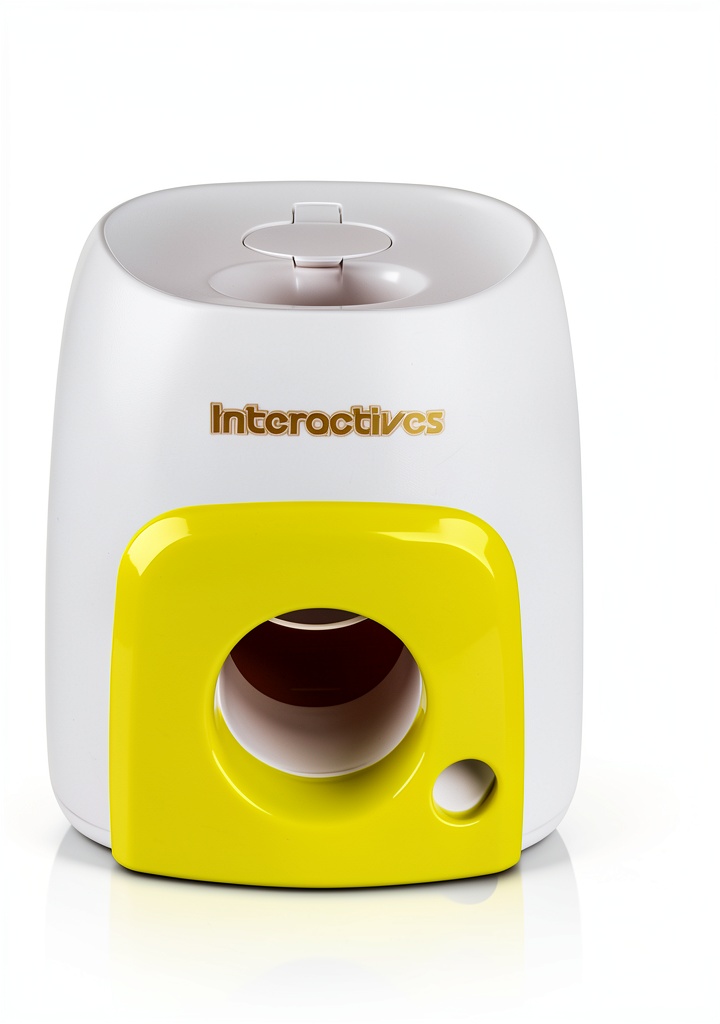
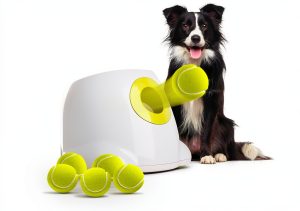
The Kukyller dog ball rolling machine is a deceptively simple device. At first glance, it looks like a miniature satellite dish with a tennis ball trapped in the center. The magic—and the limitation—lies in its operation. Unlike automatic ball launchers that use motors to throw balls across the yard, the Kukyller is entirely passive. You load small treats or kibble into a compartment. As your dog noses, paws, or pushes the embedded tennis ball, it rotates, occasionally dispensing a piece of food. This turns play into a rewarding puzzle, encouraging prolonged engagement through positive reinforcement.
| Specification | Details |
|---|---|
| Product Name | Kukyller Dog Ball Rolling Machine |
| Material | ABS Plastic |
| Dimensions | 9.84 x 9.84 x 7.87 inches |
| Weight | 2.28 pounds |
| Operation | Manual (Treat-Dispensing) |
| Price | $33.25 |
| Best For | Indoor use, mental stimulation, anxiety reduction |
Real-World Performance & Feature Analysis
Design & Build Quality: The Tank of Dog Puzzles
Holding the Kukyller, the first thing you notice is its sturdiness. The ABS plastic has a solid, dense feel, a world away from the hollow, brittle plastic of many cheaper toys. The base is wide and low to the ground, providing impressive stability. My 55-pound Australian Shepherd, who can flip over heavier objects when excited, couldn’t overturn it with normal play. The tennis ball is standard quality, securely held by plastic prongs that are robust but allow it to spin freely. The treat compartment lid snaps shut firmly, preventing my clever terrier mix from figuring out how to pry it open. The build quality is the most convincing reason to choose the Kukyller over a DIY solution; it’s built to last through enthusiastic, unsupervised play sessions.
Performance in Real Use: Two Dogs, Two Very Different Experiences
I tested the Kukyller with two test subjects: Finn, the high-energy, puzzle-loving Australian Shepherd, and Piper, a more cautious, occasionally anxious terrier mix.
Scenario 1: The Puzzle Pro (Finn) For Finn, this was a fun challenge. He figured out the mechanics within minutes—nose down, push the ball, get a kibble. The key was the food reward. Using his high-value training treats resulted in 20-30 minutes of focused engagement. He’d bat it around the living room, listening for the rattle of a treat being dispensed. It successfully kept him occupied while I worked from home, but it was not a physical workout. He’d still need a walk or a game of fetch afterward. This toy managed his boredom, not his energy.
Scenario 2: The Anxious Chewer (Piper) Piper’s reaction was more nuanced. She was initially suspicious of the strange object. It took some encouragement (and smearing a bit of peanut butter on the ball) to get her interested. Once she discovered the treats inside, she engaged, but differently. Instead of rolling it, she’d lie down and chew intently on the tennis ball itself. This was actually a win. Her destructive chewing is an anxiety behavior, and the Kukyller redirected that impulse onto an approved, durable target. It didn’t stop the chewing, but it saved my furniture. For her, it’s an anxiety-relief tool.
Ease of Use and Cleaning
Setup is idiot-proof: open lid, insert treats, close lid, present to dog. The portability is a massive advantage. I could easily carry it to my home office, the backyard, or even toss it in the car for a trip. Cleaning is straightforward; the entire unit can be wiped down with a damp cloth. The tennis ball is removable for washing or replacement, which is crucial as it gets slobbery and dirty. The lack of batteries or charging is a defining feature that eliminates the biggest point of failure in automatic toys.
Durability & Reliability
After three weeks of near-daily use, the Kukyller shows zero signs of wear. The plastic has no cracks or deep scratches, even from Piper’s focused chewing. The ball rotation remains smooth. This reliability is where it shines compared to motorized competitors. There are no sensors to misalign, no motors to burn out, and no apps to glitch. Its simplicity is its greatest asset for long-term durability. The only potential failure point long-term would be if a dog managed to sever the plastic prongs holding the ball, which would require extremely determined and powerful chewing.
Pros & Cons
Pros:
- Exceptionally Durable: The ABS construction can handle rough play far better than most toys in this price range.
- Perfect for Mental Stimulation: Effectively engages a dog’s problem-solving skills, which can be more tiring than physical exercise.
- Truly Portable & Hassle-Free: No power requirements make it ideal for travel or use anywhere.
- Promotes Positive Behaviors: Redirects chewing and pawing into a rewarded activity.
- Easy to Clean and Maintain: Simple design with a removable ball for easy hygiene.
Cons:
- Not for High-Energy Exercise: Will not physically tire out an energetic dog; it’s a mental game, not a physical one.
- Requires a Food-Motivated Dog: Dogs who aren’t interested in treats will likely ignore it.
- Not Truly “Automatic”: This is a common misconception. The dog must do all the work.
- Tennis Ball is a Wear Item: Will need replacement over time, especially for chewers.
- Limited by Treat Capacity: Once the treats are gone, many dogs will lose interest until it’s refilled.
Comparison & Alternatives
How does the Kukyller stack up against the competition? Here’s a breakdown of when to choose it and when to look elsewhere.
Cheaper Alternative: Kong Classic
The Kong is the gold standard for durable, stuffable chew toys ($10-$15). It’s cheaper and even more indestructible for powerful chewers.
When to choose Kong: If your primary goal is to occupy a powerful chewer with a long-lasting challenge (like freezing peanut butter inside).
When to choose Kukyller: If your dog enjoys the interactive, rolling motion and you want the specific puzzle aspect of manipulating the ball to get rewards.
Premium Alternative: Cheerble Wicked Ball
This is a true automatic toy ($40-$60). The ball moves on its own, vibrating and changing direction randomly for 20-minute intervals.
When to choose Cheerble: If you need a toy that provides active, unpredictable movement to engage dogs that need more physical stimulation and aren’t as food-focused.
When to choose Kukyller: If you prioritize durability, silence (the Cheerble can be noisy), and a toy that doesn’t require charging. The Kukyller is also better for dogs who are motivated by food puzzles.
Buying Guide / Who Should Buy
Making the right choice depends entirely on your dog’s personality and your goals.
Best For Beginners: If you’re new to puzzle toys, the Kukyller is a fantastic starting point. It’s simple to use, easy to understand for the dog, and low-risk. You don’t need to worry about complex programming or battery life. It’s a straightforward way to test if your dog enjoys this type of enrichment.
Best for Specific Needs: This toy is a star performer for specific scenarios. It’s ideal for apartment dwellers who need a quiet, compact indoor activity. It’s perfect for owners of dogs with mild separation anxiety, as it provides a positive, distracting activity. It’s also excellent for senior dogs who need mental engagement without strenuous physical exertion.
Not Recommended For:
Do NOT buy the Kukyller if:
– Your dog’s primary need is intense physical exercise (get a Chuckit! ball launcher instead).
– Your dog is an extreme chewer who has destroyed similarly hard plastic toys in the past (opt for a solid rubber Kong Wobbler).
– Your dog has no interest in food or gets frustrated easily with puzzles (a self-moving ball might be a better fit).
FAQ
Is the Kukyller ball launcher good for separation anxiety?
Yes, but with a caveat. It’s excellent for mild to moderate anxiety by providing a positive distraction as you leave. However, for severe anxiety, it should be part of a broader training program and not a standalone solution. The positive association with the toy can help reduce stress.
What size dog is this for?
It’s best suited for small to medium-sized dogs (approx. 10-50 lbs). While a large dog could use it, they might find the scale a bit small and the tennis ball easy to swallow (always supervise play).
Can I use my own tennis balls?
Yes, the tennis ball is a standard size and can be replaced when it wears out. This is a great feature for long-term use.
Is it really worth $33?
If your dog engages with it, absolutely. Compared to a $150 automatic launcher that might break, the Kukyller’s durability and effectiveness as a puzzle toy provide strong value. If you’ve had success with simpler treat-dispensing toys, this is a worthwhile upgrade. If your dog ignores puzzles, it’s a pass.
How do I get my dog interested in it?
Start with high-value, smelly treats. You can even smear a bit of peanut butter or wet food on the exterior ball to encourage licking and initial interaction. Make it a positive, exciting game when you first introduce it.
 Wok Cookbook Healthy Chinese Cooking Kindle eBook
  Cleaning Cart by Generic with Broom and Mop Holder Steel Organizer
  Cookbook for Beginners and Beyond Japanese Cooking Healthy
  Pinoy Cookbooks Pacific Rim Cooking Confectionary Desserts
  FamilyMBA Press Business Quality Control Lean Management
  Cleaning Cart VEVOR 3-shelf janitorial cart 25Gallon PVC Bag 200lb
  Large Rolling Cleaning Caddy by HODRANT – Detachable Trolley & Lid
  Carnival Indian Cooking Kindle Book English Recipes
  Callisto Asian Cooking Kindle eBook English Recipes
  16 x 11 x 27 inch Replacement Janitorial Cleaning Cart Bag High Capacity Commercial Janitorial Cart Bag Housekeeping for Housekeeper Restaurant Motel Cafe Facility Office, 23 Gallon, Yellow(1 Pc)
  Extra Large Rolling Cleaning Caddy Bag LIANGSHENGYUAN 40L Trolley
  Balance Vegan Cooking Kindle Book English Original Edition