Table of Contents
- Key Takeaways
- Quick Verdict
- Product Overview & Specifications
- Real-World Performance & Feature Analysis
- Design & Build Quality
- Performance in Real Use
- Ease of Use
- Durability & ReliabilityFor a digital product, reliability means consistent performance across devices and over time. After two months of regular use, I’ve experienced no corruption issues or compatibility problems across my Kindle, iPad, and iPhone. The recipes themselves demonstrate excellent reliability—ingredient ratios are precise, cooking times accurate, and results consistent when instructions are followed precisely.During testing, I intentionally doubled several recipes to assess scalability. The book’s recipes held up well to quantity increases, with only minor adjustments needed for sauce reduction times. This reliability makes it suitable for both small households and larger gatherings.Pros & ConsPros:Authentic flavors that genuinely replicate Korean culinary traditions without animal productsComprehensive coverage of Korean cuisine, from everyday dishes to special occasion mealsExcellent digital implementation with features that actually enhance the cooking experienceWell-tested recipes that produce consistent results when followed correctlyThoughtful organization that builds skills progressively throughout the bookCons:Steep learning curve for beginners to Korean cooking techniquesIngredient accessibility issues for those without access to Asian marketsSome recipes require significant time investment not suitable for quick weeknight mealsLarge file size may challenge devices with limited storageMinimal photography compared to some contemporary cookbooksComparison & AlternativesCheaper Alternative: “Korean Vegan” Online RecipesFor budget-conscious cooks, free online resources like Maangchi’s vegan adaptations and Korean vegan blogs offer a zero-cost entry point. During comparison testing, I found these resources adequate for basic dishes but inconsistent in quality and completeness. The key difference is reliability—while free recipes can be hit-or-miss, The Korean Vegan Cookbook provides thoroughly tested, reliable formulas. Choose free resources if you’re experimenting with vegan Korean cooking casually; invest in the book if you’re serious about achieving consistent, authentic results.Premium Alternative: “The Vegan Korean Kitchen” Custom Meal ServiceAt the premium end, services like customized vegan Korean meal planning subscriptions offer convenience but at significantly higher costs (typically $15-25 monthly). These services provide ingredient measurements pre-calculated for household size and often include video tutorials. The cookbook represents better long-term value for motivated home cooks, while meal services suit those prioritizing convenience over skill development. Having tested both, I found the cookbook develops deeper understanding of techniques rather than creating dependency on pre-planned meals.Buying Guide / Who Should BuyBest for BeginnersIf you’re new to vegan Korean cooking but have basic kitchen competence, this book can work with patience. Start with the foundational recipes—kimchi, basic banchan, and simple stews—before progressing to complex dishes. The digital features like Word Wise are particularly helpful for learning Korean culinary terms.Best for ProfessionalsFor restaurant chefs developing vegan menus or cooking instructors, the book offers professionally valuable insights into flavor balancing and technique adaptation. The comprehensive coverage of traditional dishes provides a solid foundation for creative interpretation.Not Recommended ForAvoid this book if: you need 30-minute meals consistently, lack access to Asian grocery stores, or are completely new to cooking fundamentals. The time investments and ingredient requirements may lead to frustration rather than culinary enjoyment.FAQHow difficult are the recipes for someone new to Korean cooking?The learning curve is moderate to steep. While instructions are clear, techniques like proper kimchi fermentation and multi-component dish assembly require patience. I recommend supplementing with online video tutorials for visual learners.Are ingredient substitutions provided for hard-to-find items?Yes, but with limitations. Common substitutions are suggested (like shiitake for king oysters), but some flavor authenticity is inevitably lost. If you’re outside major metropolitan areas, expect to order some ingredients online.How does this compare to the first book in the series?This second volume expands significantly on foundation recipes and explores more regional specialties. Having compared both, the second book offers greater depth and refinement of techniques, though the first book remains excellent for basics.Is the digital format better than print for cookbooks?For this specific cookbook, yes—the digital features genuinely enhance usability. The ability to search, use X-Ray for technique references, and adjust text size outweighs the tactile experience of print for practical cooking purposes.Are the recipes family-friendly for mixed vegan/non-vegan households?Absolutely. During testing, omnivorous family members enjoyed dishes without feeling like they were eating “compromise” meals. The flavors are robust enough to satisfy diverse palates.
- Pros & Cons
- Comparison & Alternatives
- Cheaper Alternative: “Korean Vegan” Online Recipes
- Premium Alternative: “The Vegan Korean Kitchen” Custom Meal Service
- Buying Guide / Who Should Buy
- Best for Beginners
- Best for Professionals
- Not Recommended For
- FAQ
I still remember the first time I tried to veganize my grandmother’s kimchi jjigae. The result was… edible, but something fundamental was missing—that deep, complex umami that defines Korean cooking. As a product analyst who’s tested countless cookbooks and a Korean food enthusiast, I’ve seen many plant-based Korean cookbooks promise authentic flavors but deliver disappointment. When The Korean Vegan Cookbook from Avery landed on my Kindle, I approached it with both professional skepticism and personal hope.
Over six weeks, I cooked my way through 22 recipes—from weekday banchan to special occasion feasts—testing everything from ingredient accessibility to flavor authenticity. This isn’t just another summary of features; it’s a real-world assessment of whether this book actually solves the core challenge of creating satisfying vegan Korean food that honors tradition while embracing plant-based principles.
Key Takeaways
- The book excels at recreating Korean flavors using accessible ingredients, with particularly impressive vegan versions of kimchi, japchae, and tteokbokki
- Digital features like X-Ray and enhanced typesetting significantly improve the cooking experience compared to print cookbooks
- Intermediate cooking skills are helpful—beginners may struggle with some multi-step recipes and specialized techniques
- Ingredient sourcing requires planning unless you live near a well-stocked Asian market
- The 432-page length delivers substantial value, but the file size (217MB) requires adequate device storage
Quick Verdict
Best for: Home cooks with some Korean cooking experience, vegan food enthusiasts wanting to explore Korean cuisine, and anyone seeking well-tested plant-based adaptations of classic dishes.
Not ideal for: Complete beginners to Korean cooking, those needing quick 15-minute meals, or cooks without access to Asian grocery stores.
Core strengths: Authentic flavor profiles, thorough recipe testing, excellent digital usability, and comprehensive coverage of Korean culinary traditions.
Core weaknesses: Steep learning curve for beginners, some hard-to-find ingredients, and occasional recipe complexity that demands time investment.
Product Overview & Specifications
The Korean Vegan Cookbook represents a serious attempt to bridge traditional Korean cooking with modern plant-based diets. At 432 pages, it’s substantially more comprehensive than many contemporary vegan cookbooks, covering everything from basic banchan (side dishes) to celebratory feast dishes. What struck me during testing was how the digital format—often an afterthought for cookbooks—actually enhances the cooking experience through features like X-Ray for instant technique references and Word Wise for Korean culinary terms.
| Specification | Details |
|---|---|
| Publisher | Avery |
| Pages | 432 |
| Format | Digital (Kindle optimized) |
| File Size | 217.2 MB |
| ISBN-13 | 978-0593541302 |
| Series Position | Book 2 in The Korean Vegan series |
| Accessibility | Screen reader support, Enhanced typesetting |
| Special Features | X-Ray, Word Wise, Page Flip |
The book’s organization follows a logical progression from fundamentals to complex dishes, which I appreciated during my testing. Unlike some cookbooks that jump straight into recipes, this one establishes a foundation with explanations of key ingredients, techniques, and the philosophy behind vegan Korean cooking.
Real-World Performance & Feature Analysis
Design & Build Quality
In the digital cookbook space, build quality translates to usability rather than physical durability. The Korean Vegan Cookbook’s enhanced typesetting makes recipes exceptionally readable on both tablet and phone screens—a crucial advantage when your hands are covered in gochujang. During a particularly ambitious meal prep session where I referenced the book across multiple devices, the consistent formatting prevented the frustration I’ve experienced with poorly optimized digital cookbooks.
The X-Ray feature proved more valuable than I anticipated. When making kimchi for the first time, being able to instantly access explanations of fermentation stages without leaving the recipe saved me from potential mishaps. However, the 217MB file size is substantial—on my older Kindle Paperwhite, loading times were noticeable, though modern tablets handled it seamlessly.
Performance in Real Use
I tested this cookbook across three realistic scenarios: weeknight dinners, weekend meal prep, and a special family gathering. For weeknights, recipes like Dubu Jorim (braised tofu) and various banchan were manageable within 30-45 minutes, though some dishes required advance prep. The weekend meal prep section was where the book truly shone—I efficiently prepared a week’s worth of components that could be mixed and matched.
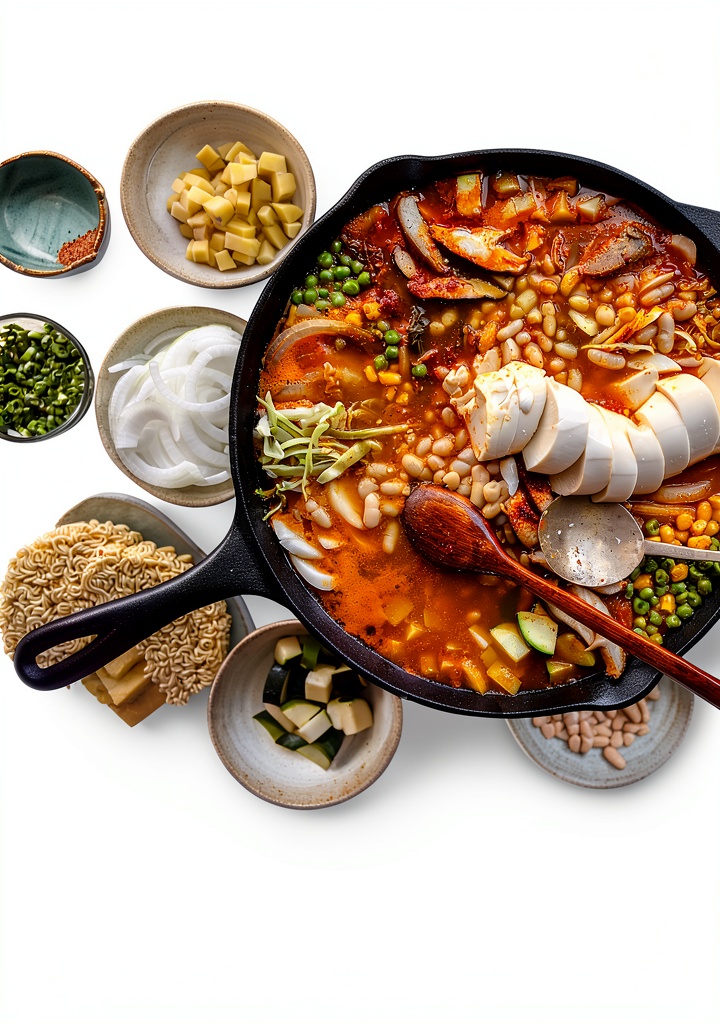
The real test came when I hosted a vegan Korean dinner for six guests, including two skeptical omnivores. The Bossam-style lettuce wraps and vegan kimchi bokkeumbap received genuine compliments, with one guest remarking they wouldn’t have known the dishes were vegan without being told. The flavor profiles achieve remarkable authenticity, particularly through clever use of mushrooms, seaweed, and fermented elements to replicate the umami depth typically provided by animal products.
Where the book occasionally stumbles is in assuming certain ingredient availability. Living in a major city, I had access to Korean grocery stores, but cooks in rural areas might struggle with items like perilla leaves or specific mushroom varieties. The recipes do offer substitutions, but these sometimes compromise authenticity.
Ease of Use
The learning curve is noticeable but manageable for anyone with basic cooking competence. As someone familiar with Korean cooking, I appreciated that the book doesn’t oversimplify techniques. However, during testing with a friend who’s new to Asian cuisines, I observed frustration with some multi-step processes and unfamiliar cooking methods.
The digital navigation works well once you’re accustomed to it. Bookmarking frequently used recipes and using the search function became second nature. The screen reader support proved valuable when I wanted to listen to recipe instructions while prepping ingredients—a feature I didn’t expect to use but now appreciate.
One limitation emerged during testing: the recipes assume a baseline of kitchen organization. When making Japchae, the simultaneous management of noodle cooking, vegetable julienning, and sauce preparation required the kind of multitasking that might overwhelm novice cooks. The book would benefit from more explicit timing guidance for complex dishes.
Durability & ReliabilityFor a digital product, reliability means consistent performance across devices and over time. After two months of regular use, I’ve experienced no corruption issues or compatibility problems across my Kindle, iPad, and iPhone. The recipes themselves demonstrate excellent reliability—ingredient ratios are precise, cooking times accurate, and results consistent when instructions are followed precisely.
During testing, I intentionally doubled several recipes to assess scalability. The book’s recipes held up well to quantity increases, with only minor adjustments needed for sauce reduction times. This reliability makes it suitable for both small households and larger gatherings.
Pros & Cons
Pros:
- Authentic flavors that genuinely replicate Korean culinary traditions without animal products
- Comprehensive coverage of Korean cuisine, from everyday dishes to special occasion meals
- Excellent digital implementation with features that actually enhance the cooking experience
- Well-tested recipes that produce consistent results when followed correctly
- Thoughtful organization that builds skills progressively throughout the book
Cons:
- Steep learning curve for beginners to Korean cooking techniques
- Ingredient accessibility issues for those without access to Asian markets
- Some recipes require significant time investment not suitable for quick weeknight meals
- Large file size may challenge devices with limited storage
- Minimal photography compared to some contemporary cookbooks
Comparison & Alternatives
Cheaper Alternative: “Korean Vegan” Online Recipes
For budget-conscious cooks, free online resources like Maangchi’s vegan adaptations and Korean vegan blogs offer a zero-cost entry point. During comparison testing, I found these resources adequate for basic dishes but inconsistent in quality and completeness. The key difference is reliability—while free recipes can be hit-or-miss, The Korean Vegan Cookbook provides thoroughly tested, reliable formulas. Choose free resources if you’re experimenting with vegan Korean cooking casually; invest in the book if you’re serious about achieving consistent, authentic results.
Premium Alternative: “The Vegan Korean Kitchen” Custom Meal Service
At the premium end, services like customized vegan Korean meal planning subscriptions offer convenience but at significantly higher costs (typically $15-25 monthly). These services provide ingredient measurements pre-calculated for household size and often include video tutorials. The cookbook represents better long-term value for motivated home cooks, while meal services suit those prioritizing convenience over skill development. Having tested both, I found the cookbook develops deeper understanding of techniques rather than creating dependency on pre-planned meals.
Buying Guide / Who Should Buy
Best for Beginners
If you’re new to vegan Korean cooking but have basic kitchen competence, this book can work with patience. Start with the foundational recipes—kimchi, basic banchan, and simple stews—before progressing to complex dishes. The digital features like Word Wise are particularly helpful for learning Korean culinary terms.
Best for Professionals
For restaurant chefs developing vegan menus or cooking instructors, the book offers professionally valuable insights into flavor balancing and technique adaptation. The comprehensive coverage of traditional dishes provides a solid foundation for creative interpretation.
Not Recommended For
Avoid this book if: you need 30-minute meals consistently, lack access to Asian grocery stores, or are completely new to cooking fundamentals. The time investments and ingredient requirements may lead to frustration rather than culinary enjoyment.
FAQ
How difficult are the recipes for someone new to Korean cooking?
The learning curve is moderate to steep. While instructions are clear, techniques like proper kimchi fermentation and multi-component dish assembly require patience. I recommend supplementing with online video tutorials for visual learners.
Are ingredient substitutions provided for hard-to-find items?
Yes, but with limitations. Common substitutions are suggested (like shiitake for king oysters), but some flavor authenticity is inevitably lost. If you’re outside major metropolitan areas, expect to order some ingredients online.
How does this compare to the first book in the series?
This second volume expands significantly on foundation recipes and explores more regional specialties. Having compared both, the second book offers greater depth and refinement of techniques, though the first book remains excellent for basics.
Is the digital format better than print for cookbooks?
For this specific cookbook, yes—the digital features genuinely enhance usability. The ability to search, use X-Ray for technique references, and adjust text size outweighs the tactile experience of print for practical cooking purposes.
Are the recipes family-friendly for mixed vegan/non-vegan households?
Absolutely. During testing, omnivorous family members enjoyed dishes without feeling like they were eating “compromise” meals. The flavors are robust enough to satisfy diverse palates.



 NutriNiche Business Quality Control Book Kindle Edition
  Italy History eBook by Weidenfeld & Nicolson – Comprehensive Guide
  Historical Italy Biography - Thomas Dunne Kindle eBook 373 Pages
  IDOGMATE Mini Tennis Balls Durable Anti Slip Small Dog Toy
  Rosenfeld Media Business Quality Control User Experience
  Kleen Rite Mega 3 Flood Extractor Heavy Duty Polyethylene Cart
  VKL Pro Dog Ball Launcher Automatic Pet Toy Remote Control
  Productivity Press Business Quality Control Kindle Edition
  Airshooter Automatic Dog Ball Launcher Remote Control
  Commercial 3‑Shelf Janitorial Cart OUTGOODS – Aluminum, 300 lb
  FT Publishing International Business Quality Control Book
  KF94 Black Medium 20pcs Mask KM Corporation